

Very Few Shots Left to Call
For most of the book of Acts, Paul is a force of nature. He picks the city, preaches, leaves when things go sideways and decides where to go next. Then he gets on a boat to Jerusalem, and one by one the decisions stop being his. He's arrested, nearly assassinated, left in a Caesarean jail for two years and finally shipped off to Rome by people who keep making a mess of it.
A Leader Who Doesn't Hold On Too Long
In Acts 20, Paul says goodbye to the leaders of the church in Ephesus. He's convinced he's never coming back. And what looks like an unremarkable transition between two bigger stories turns out to be the moment Paul realizes everything he helped build is going to outlast him.
Why Antioch Sent Away Its Best
When the church in Antioch was thriving, their first instinct wasn't to protect what they'd built. It was to send their very best out the door. In Acts 13, the Spirit sets apart Barnabas and Paul, and the imagination of the early church begins to shift from the centre out to the margins in. What if the future of the church was never meant to look like ketchup on everything? A conversation about expansion, imagination, and what it actually means to become all things to all people.
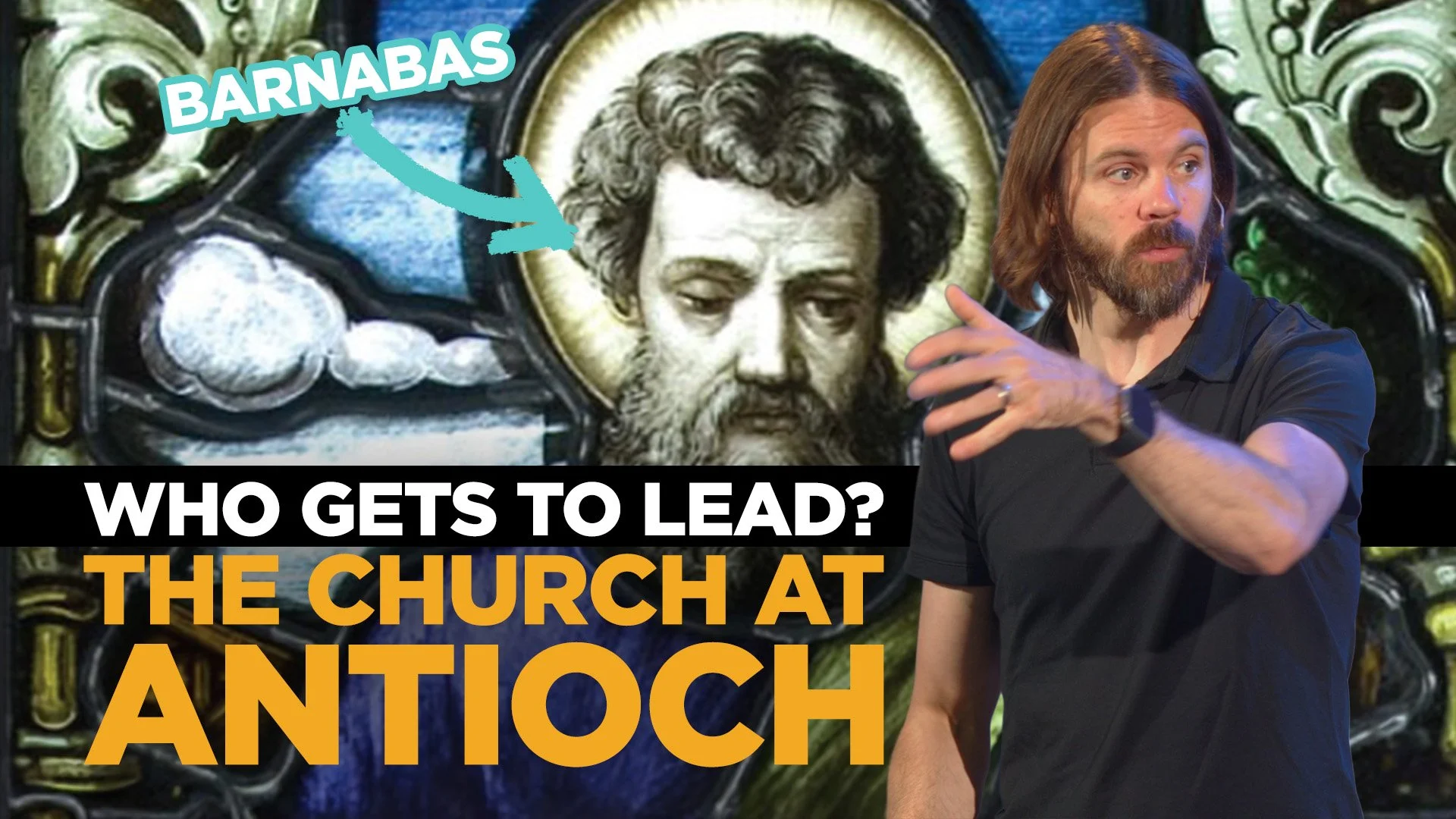
Murderer's Row: The Church Jerusalem Didn't Expect
The church at Antioch starts with a roll call of names nobody in Jerusalem would have chosen: a displaced Levite, Simeon "the black one," a man with a Roman name first-century Jews would have heard as enemy, a foster brother of the king who murdered John the Baptist, and Saul, the persecutor nobody had heard from in a decade. This is a ground-up, grassroots, lay-led explosion of good news, and it looks nothing like what the establishment expected.
The Gift of Rhythm: Why the Christian Calendar Matters
The Christian calendar is probably not something most of us think about all that much—except maybe when it brings us around to Christmas or Easter again. And yet, it’s quietly shaping so much of our worship and rhythm as a church community. But beyond its liturgical role, there’s something profoundly human about the way this calendar works. Neuroscience, of all things, can help us understand why.

The Beauty of Singing Songs You Don't Like
Finding music everyone loves in church? Impossible. But maybe that’s the point. So let’s explore why singing—even songs you don’t personally enjoy—can bond us, teach us, and heal us in ways sermons can’t. Learn why the shared act of worship matters more than musical preference, and how singing together reaches the deepest parts of who we are.

Remembering Walter: Lament, Imagination, and the Church We Could Be
Walter Brueggemann (1933–2025) was one of the most influential Old Testament scholars of our time—an educator, theologian, and prophetic voice whose work shaped countless pastors, students, and communities.

Singing Before the Bible
Before the Bible was complete, early Christians were already writing—and singing—songs of faith. In this message, we explore the Oxyrhynchus Hymn, a 1,700-year-old Christian chant preserved with musical notation, and what it reveals about worship, theology, and the heart of the early church.

Why We Sing: More Than Just a Church Thing
Why do humans sing? From evolutionary debates to neuroscience, and from Frozen to the ABCs, we explore the surprising origins and benefits of song. Discover why singing together might be one of the most important (and most neglected) practices for our mental health, memory, and spiritual life.
Values That Shape the Mission
What’s more important for a church — a clear mission statement or lived values? Mission statements can sometimes feel repetitive or overdone. Instead, we focus on how values shape the journey, guiding us to live out the mission with integrity and grace.
Thine Is the Kingdom: Rediscovering the Roots of the Lord's Prayer
Why does “For thine is the kingdom, the power, and the glory…” appear in some Bibles — but not in others? The surprising truth? This line traces back to one of the earliest known Christian writings outside the New Testament: the Didache.

When Spirit Speaks: A Pentecost Invitation
Today is Pentecost. And while the Christian calendar quietly ushers us through this season, it's worth pausing to reflect on what this moment truly means. Pentecost marks that pivotal point in the biblical narrative where Jesus leaves, and the Spirit arrives. It's not just a story of absence, but of new presence—God's Spirit, now at work within us and through us for the sake of the world.

Remembering Walter Brueggemann
This week, the world lost a towering figure in theology: American theologian and biblical scholar Walter Brueggemann passed away. And maybe, if I'm honest, I should have shared this reflection a long time ago. But his passing stirred something in me—a deep gratitude for his influence and a renewed urgency to pass along the gift of his work to you.

From Evildoers Come Evil Deeds: Who Are We Really?
We all want to believe we’re good people. We imagine ourselves as kind, generous, and fair—but what if our self-perception is covering up the reality of our actions?
Faith is a Relationship and a Religion
We're exploring the depth and breadth of faith beyond just emotional experiences. Is Christianity a relationship or a religion? Can both coexist? We dive into the tension between the felt, emotional side of faith and the structured, ritualistic practices that shape us—even when we don’t “feel” close to God.
The Only Authority That Matters
What really intrigues me about 1 Samuel is God's response to the request for a king. Even though God is willing to work with what the people want and give in to demands that God deems inappropriate and that are not going to lead them anywhere good, I'm struck by God's posture that inherited power is inherently toxic. And for me, this goes all the way back to that conversation about apparent and actual authority in communities.
Love That Grounds the Gift
If I have the gift of prophecy and can fathom all mysteries and all knowledge, and if I have a faith that can move mountains, but do not have love,—I am nothing. 1 Corinthians 13 I might even suggest that if you can do all that, And you don’t have love, You’re not nothing, You’re a net negative.
Healing on Both Sides of the Lake
The narrative starts with a heart-touching tale of Jairus pleading for his sick daughter's healing. But that's just the set up for the real story. We encounter the tale of a woman struggling with a bleeding disorder for over a decade. Through the interaction of these stories, Mark uncovers the remarkable power of Christ, his deep compassion, and his outreach to the marginalized and ostracized.
Jesus and the Pharisees: A Misunderstood Relationship
We sometimes have this imagination that the Pharisees were harsh and therefore hated by the people, as opposed to Jesus, who was loved by all the common folk. The truth, however, is more nuanced, and the Pharisees were largely considered the liberals of the day, and that made them quite popular. For example, from inter-Testamental Jewish writings that we know of, the Pharisees were often the group that downplayed religious punishment and were most often criticized for being too lenient with religious penalty.
The Parables We Live
When scholars look at tightly packed similar stories like we find in the opening of Mark, they will often refer to them as symbolic actions. And that's a tricky phrase, because often people will hear that and latch on to the word symbolic and then assume that what scholars are trying to do is undermine the historicity of these miracles, like they didn't really happen. They're just symbols or metaphors. Personally, I don't think that's really all that scary. To be honest, sometimes the line between what's a parable and what's not from Jesus is nuanced.