

Gods Made by Human Hands
Demetrius makes his living selling silver shrines of Artemis. When Paul starts convincing people that gods made by human hands are no gods at all, Demetrius calls a meeting. And notice who he calls. Not the priests. Not the most devoted worshippers. He goes straight to the people whose income depends on the tourist trade.
Turning the Other Cheek: Nonviolence as Holy Defiance
When Jesus said, “turn the other cheek,” he wasn’t asking us to accept abuse or ignore injustice. He was showing us how to resist evil without becoming its mirror. In this teaching, Jeremy Duncan explores the historical context, the scholarship of Walter Wink, and the radical creativity behind Jesus’ vision of nonviolent resistance — a vision that still calls us toward the peace God dreams for the world.

Egypt, Pharaoh, and the Story Still Unfolding
Egypt and Pharaoh aren’t just ancient figures in the Bible—they’re symbols of every system that resists justice. In this teaching, we explore how the Exodus story speaks to the human condition across history, from Babylon and Rome to the powers and empires we see today.

Building Justice: A Conversation with IJM Canada
What does it mean to pursue justice in a world still grappling with the weight of colonial history, inequality, and spiritual disillusionment? In this powerful conversation, Joash Thomas—National Director of Mobilization & Advocacy at IJM Canada—joins us at Commons Church to explore what it means to be faithful in the present through the pursuit of justice.

The Justice of Jesus: A Conversation with Joash Thomas
In a recent conversation, I had the privilege of sitting down with my friend Joash Thomas to talk about the journey of writing, the legacy of the Apostle Thomas in India, and the vision behind his new book, The Justice of Jesus, releasing this September.
Peace in Canaan: A More Nuanced Story
Robert Alter cites Shmuel Avramsky's work here to suggest that the Amorites were a group of settlers coming down from the northern Aegean Sea, and there are lots of other groups coming down from the southern Aegean Sea.

The Smell of Power: Dangerous Allure of Enemies
The story in 1 Samuel takes a dark turn when Jonathan assassinates a Philistine leader. This act of aggression is followed by a propaganda campaign, with Saul spreading a narrative that the Philistines view Israelites as "obnoxious" or "noxious." This manipulation of public opinion to justify violence and consolidate power is a timeless tactic that we must be wary of, even in our modern context.
The Power That Gives Itself Away
There's this really famous scratching or carving from the second century that was discovered in Rome. It's called the Alexamenos Graffito. But essentially, it's this sort of crude graffiti epithet that was carved into a wall. But it's an image of Jesus on the cross, with a donkey head, to illustrate how silly this person thought the whole idea was. And underneath is scratched the inscription, Alexamenos worships his God. Essentially, this was just someone making fun of their neighbour for being a Christian because they thought the whole idea of a crucified saviour was absurd. Why would any God worth worshiping allow that to happen to them?
The God Who Is Willing to Lose
It's interesting to me that all the way along, through all of the judges, always the catalyst for a new leader to emerge has been a battle. Even in the story of Deborah, who doesn't lead the military directly herself like the other judges, she's still the one who directs Barak to throw off the oppressive weight of Jabin and Sisera. But each time, all the way along, the battle, the fight is always presented as a fight to throw off some kind of oppressive force that's bearing down on Israel. God raises up a judge to save them from this. God raises up a judge to save them from this. And so, we don't get any of that. And yet here, if we're reading closely, at the start of chapter four, we don't get any of that. The Philistines aren't attacking, it just says the Israelites went out to fight. The whole problem with this story is that they're not being oppressed. At least not here. They just simply want a fight. And God wants none of it this time. Even if that means this God looks like a loser. This is a pretty important moment in Hebrew history. The realization that God is willing to lose when that's the better choice.

The Divine Warrior Reimagined
Revelation uses this very popular first century literary genre called apocalypse, specifically to upend a lot of our violent fantasies about God. In Revelation 19 John uses an image from Isaiah and he flips it upside down in order completely change the meaning of Scripture. Everything is new in the light of Jesus.
When God Gets Angry: Distinguishing Divine Wrath from Human Reaction
James says that our human anger does not produce the righteousness God desires. So, what exactly is the difference between "human" and "holy" anger. I think it's precision, but I'd love to hear your thoughts.
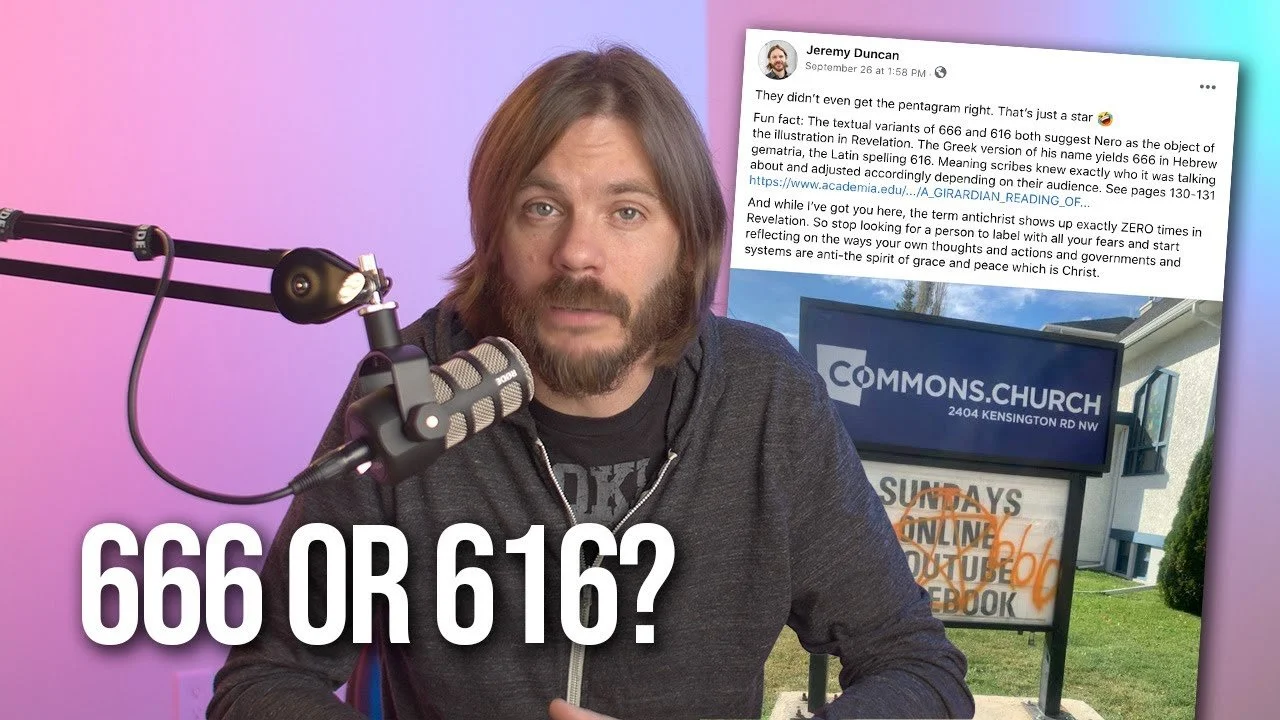
When Graffiti Sparks Theology: Understanding 666 and the Antichrist
The church was vandalized a few weeks ago which was unfortunate but it did give us a good reason to talk about where our popular fascination with the number 666 comes from and why we should all stop worrying about the Antichrist.
Living on the Margins: A Fresh Look at Romans 13
There is a long and terrible history of Romans 13 being weaponized by those in power against the marginalized. The problem, of course, is that this letter was written not to the powerful at all but instead to a community living in the shadow of a hostile authority.
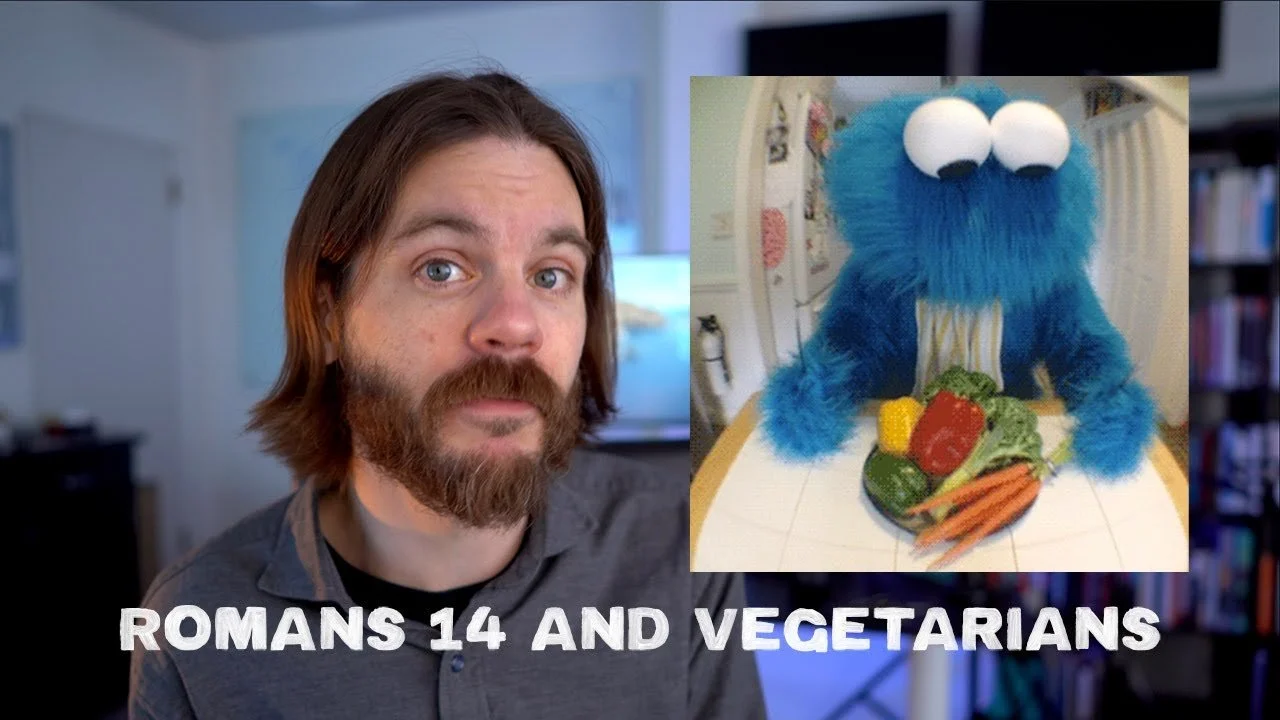
Learning to Listen: Reflections from Romans 14
In Romans 14 Paul is almost obsessively focused on using the metaphor of diet to talk about difference in the church.