
The Best and Worst of Substitutionary Atonement
A few people have sent me this clip from Josh Howerton, I think because I've been critical of penal substitutionary models before. And it's a genuinely interesting clip, because it manages to demonstrate both the best and the worst of substitutionary language about the cross in about sixty seconds.
A Beautiful Disruption
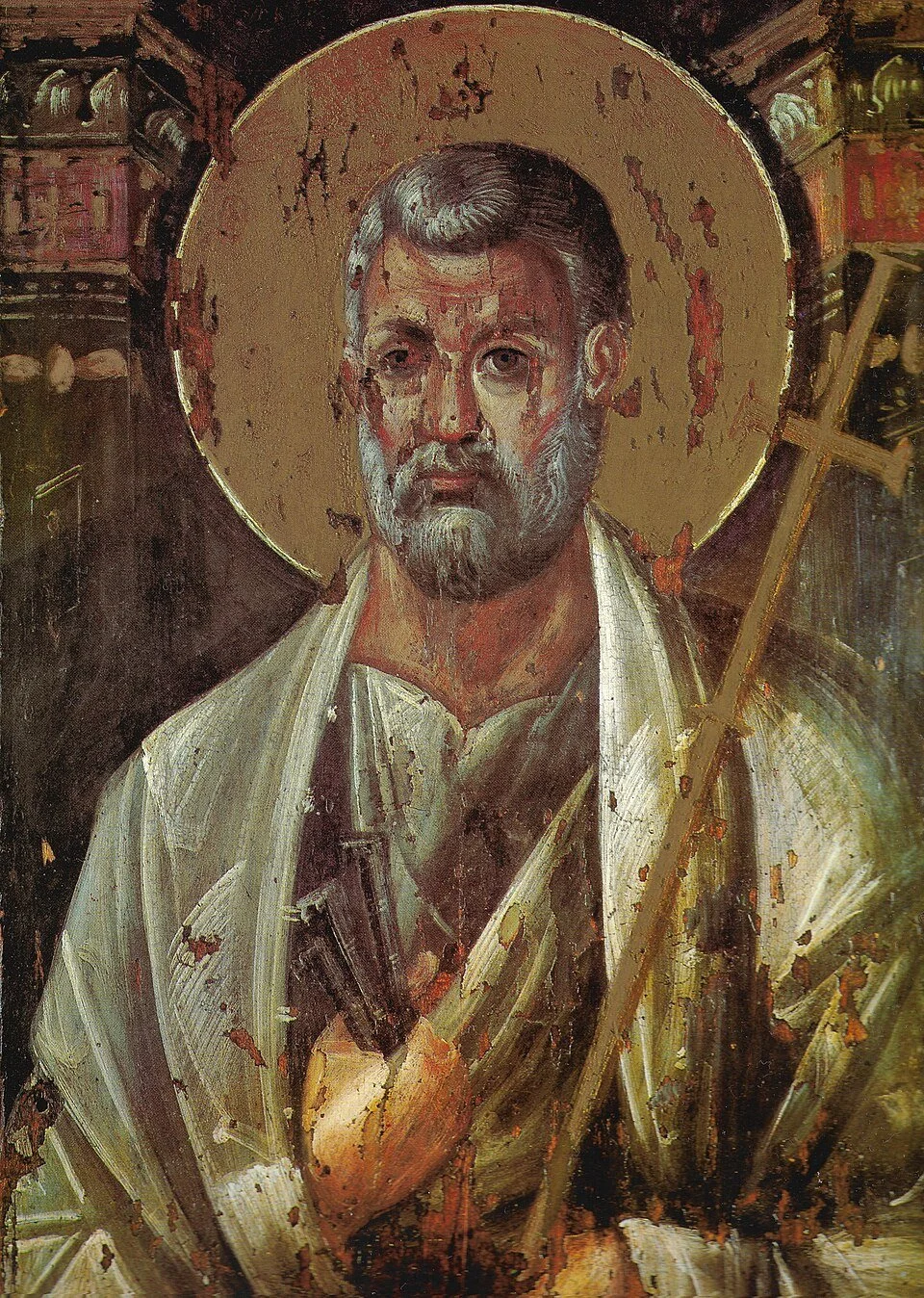
In Acts 2 we get this neat glimpse into the early Church and how they were thinking about the Jesus story. In fact, when Peter stands up on the day of Pentecost, flanking by the other disciples, to address a skeptical crowd he’s actually giving the first sermon of the church era.
What If Our Familiarity With God Is the Problem?
In this clip, we explore why good theology begins with gratitude and humility, and why our attempts to become too familiar with God may actually shrink the divine down to our size. Drawing on the work of Georges Lemaître, the priest and physicist behind the Big Bang theory, along with Tolkien, Pete Holmes, Paul Tillich, and the Apostle Paul, this is a meditation on transcendence, incarnation, and the mystery of existence itself.

The Ground of Being
Organisms are interdependent. Cells are interconnected. Molecules are strings of atoms. Atoms are collections of particles. Those particles are groups of quarks, which are waves of bosons, which are just relationships of energy that glue the universe together. There’s absolutely no point in existence where anything that exists, exists on its own.
The Word About the Word
What do we mean when we talk about the word of God?
For most of my Christian life, the answer was reasonably simple. The word of God was the Bible. That big book I have a bunch of copies of on my shelf.
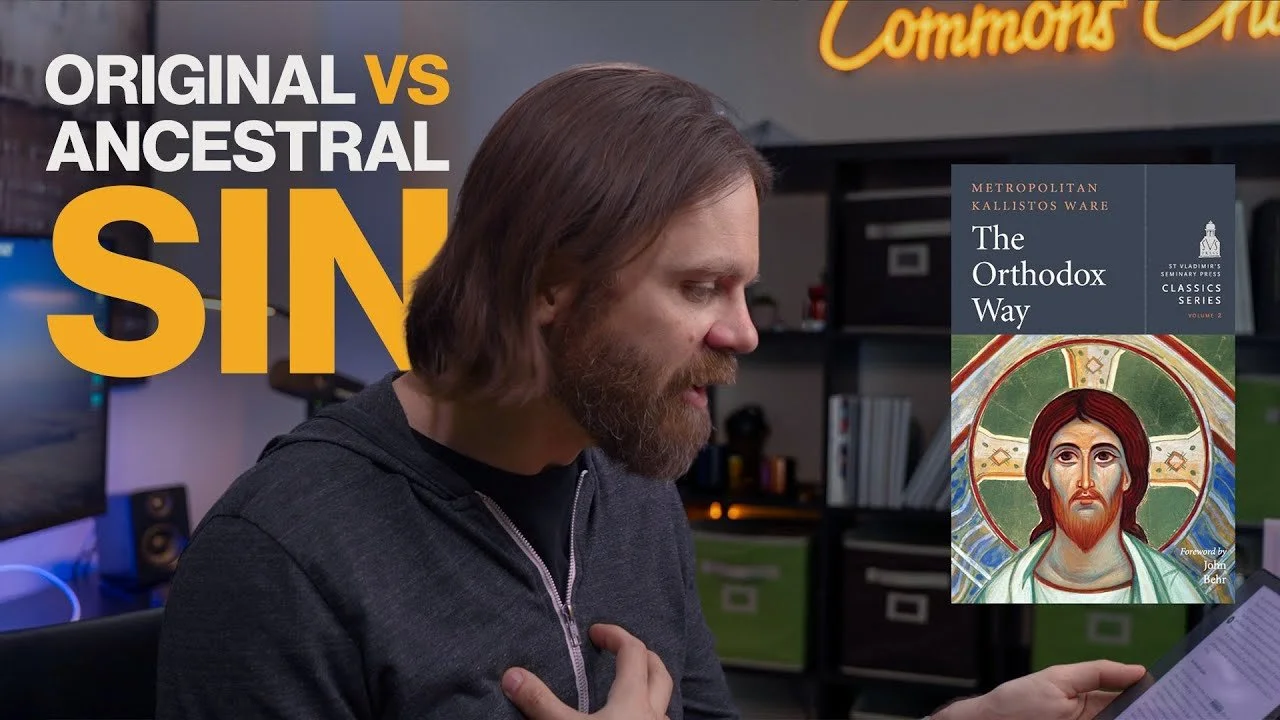
Original vs. Ancestral Sin
I want to talk about the difference between two important but distinct Christian doctrines: the doctrine of original sin and the doctrine of ancestral sin. Ancestral sin might a term you haven’t heard before, but it is very likely the doctrine you already believe.
God as Loving Community: Rethinking the Trinity
The Trinity is one of those ideas we tend to take for granted if we’ve been around the Christian story for any length of time. But here’s the thing—the Trinity isn’t an explicitly biblical idea. It emerged after centuries of wrestling with deeply complex passages like John 14, where Jesus identifies himself with the Father, then brings in the Spirit to describe how he will remain present even after he’s gone.

The God Who Stops the Knife
Let’s explore how Isaac becomes a type of Christ not because God requires blood, but because God interrupts the very idea of sacrifice. And how Jesus, in his death and resurrection, brings that interruption to its fullness. If Isaac is where God stops the knife, Jesus is where God ends sacrifice for good.

Scripture Always Points to Jesus
The Bible tells many stories—of kings, prophets, and nations—but underneath it all is a bigger narrative arc. One that has always been leading us toward Jesus. In this sermon, Jeremy Duncan explores the road to Emmaus, the layers of scripture, and why Jesus is our clearest picture of God.

The Hope of Glory in Us: Making Sense of Colossians 1
In Colossians 1:24, Paul writes that he is "filling up what is lacking in Christ's afflictions." It's not the flashiest controversy, but it has certainly stumped more than a few theologians over the centuries.
Is Paul really suggesting that Jesus didn’t finish the job? That somehow his own suffering is required to complete Christ’s work? Let’s dig in.

Jesus at the Center: Colossians and the Cosmic Christ
Colossians 1:15-20 is breathtaking. Poetic, sweeping, and theologically rich, this passage stands among the most compelling articulations of Christ in the New Testament. But its grandeur can also obscure its meaning if we’re not paying attention.
These verses are often referred to as a hymn—possibly an early Christian song, maybe written by Paul, maybe not.

When Justice Heals: Rethinking Isaiah 53 Beyond Penal Substitution
Many Christians have been taught to see Penal Substitutionary Atonement (PSA) as the only way to understand the cross. Isaiah 53 — the “Song of the Suffering Servant” — is often quoted as proof. But what if this passage offers something richer than just a legal transfer of penalty?

Rethinking Salvation: What If It’s Not About Being Saved or Unsaved?
As a pastor, one of the most common questions I hear is: “How do we know who is saved and who isn’t?” Let’s explore why the traditional categories may not reflect the deep, expansive nature of grace as taught by Jesus.
All Things Made New: Hope in Apokatastasis
Recently, I brought up this big, beautiful Greek word: apocatastasis. It's the conviction that somehow, in the end, all things will be reconciled to Christ. Just as Paul writes in Colossians 1:20, "Through Christ, God was pleased to reconcile to himself all things... by making peace through his blood, shed on the cross."
Eternal Does Not (Always) Mean Forever
Aionios does not mean eternal... at least not all the time.
When God Breaks the Rules
In the Tanakh, 1 and 2 Kings are part of the Nevi'im, or the prophets. That's why they go together with 1 and 2 Samuel. But 1 and 2 Chronicles, those come at the very end of an entirely different section of the Bible called the Ketuvim, or the writings. In fact, they're the very last books of the Hebrew Bible. And that's because Jewish people understood them as much later books that were looking back and trying to clean things up.
When Hell Isn't What You Think
In Ezekiel 37, the prophet writes about a valley of dry bones. What kind of valley is this? I'm going to say I don't think it's a real valley at all. It's a metaphor. However, I do think this valley is meant to invoke one of, or perhaps both of, two very real, very significant valleys in the Hebrew story. Those are the valleys of Hinnom and the valley of Megiddo.
When Rules Break Down
The narrative in 1 Samuel 13 reminds us that rules in faith are not arbitrary restrictions but safeguards against the misuse of religion for political gain. When Saul offers the sacrifice, he's not just breaking a ceremonial rule – he's attempting to manipulate divine favor for his own agenda. This moment serves as a cautionary tale about the perils of intertwining religion and politics.
Get Behind Me, Satan
Satan is an interesting term. It's okay if you think devil, but that's not necessarily what's going on in Jesus' mind. Throughout most of the Hebrew scriptures, Satan or Hasatan was not necessarily a person or a being. It's better to think of it more like a title. So the adversary or the one who opposes the accuser is a good translation of Hasatan. There's even a passage in the book of Numbers where God opposes a man named Balaam and the Hebrew literally says that Yahweh stood in his way as an adversary, literally his Satan. Now it's also true that by the time of the New Testament, a lot of Hebrew ideas are getting mixed in with Greek ideas and Hasatan was being used to translate the Greek word diabolos or devil, and you get this Satan devil character that emerges and that lines up with some of the ways that Hasatan is used in the Hebrew scriptures. You just need to know that every time Hasatan appears, it's not necessarily being used to talk about a personified devil. It might also just being used in the normal sense of an adversary.
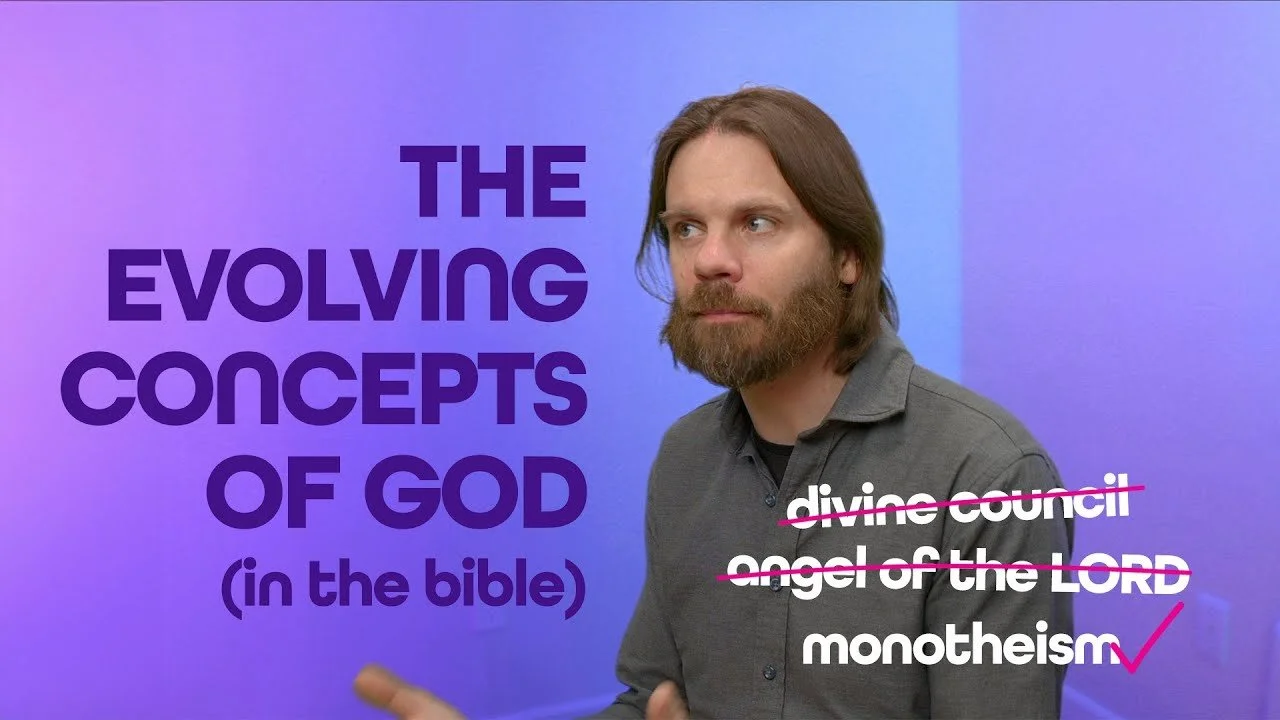
Three Visitors and the Evolving Image of God
We took a bit of a side quest together, because the big question when reading Genesis 18 is what's up with these three guys called Yahweh? Well, Christians often unsurprisingly see Trinity here, three figures that, at least on the surface, are collectively called by the divine name. That must be father, son and spirit, and that's not an unreasonable conjecture at all. However, it's also like almost certainly not what the writer of this story had in mind at all.