
Not Villains, But Neighbors: Rethinking Jesus and the Pharisees
We are exploring the often misunderstood relationship between Jesus and the Pharisees. While the Pharisees are frequently seen as the “villains” of the New Testament, there is much more nuance to their interactions with Jesus.
Born Again: A New Start Over and Over Again
Born again is a term that gets thrown around a lot in Christianity. We even have a category for a particular type of Jesus-follower, a "born again" Christian. But what exactly does this term mean?
All Theology is Biography
All theology is biography. That is a paraphrase of something I once heard Fredrick Beuchner say. I love it. Because the truth is, all of the ways we imagine the Divine are a product of all of the experiences we have had throughout our lives. And that is a feature not a bug.
The Problem with a Perfect Bible
The narrative in 1 Samuel 13 begins with an intriguing biblical translation quirk in verse 1. The Hebrew text presents an impossibility: Saul was one year old when he became king and reigned for two years. This textual conundrum serves as a powerful reminder that the essence of scripture lies not in perfect alignment of historical details, but in the profound lessons we can extract from the stories.

Peace in Canaan: A More Nuanced Story
Robert Alter cites Shmuel Avramsky's work here to suggest that the Amorites were a group of settlers coming down from the northern Aegean Sea, and there are lots of other groups coming down from the southern Aegean Sea.

The Only Authority That Matters
What really intrigues me about 1 Samuel is God's response to the request for a king. Even though God is willing to work with what the people want and give in to demands that God deems inappropriate and that are not going to lead them anywhere good, I'm struck by God's posture that inherited power is inherently toxic. And for me, this goes all the way back to that conversation about apparent and actual authority in communities.
When God Breaks the Rules
In the Tanakh, 1 and 2 Kings are part of the Nevi'im, or the prophets. That's why they go together with 1 and 2 Samuel. But 1 and 2 Chronicles, those come at the very end of an entirely different section of the Bible called the Ketuvim, or the writings. In fact, they're the very last books of the Hebrew Bible. And that's because Jewish people understood them as much later books that were looking back and trying to clean things up.
When Hell Isn't What You Think
In Ezekiel 37, the prophet writes about a valley of dry bones. What kind of valley is this? I'm going to say I don't think it's a real valley at all. It's a metaphor. However, I do think this valley is meant to invoke one of, or perhaps both of, two very real, very significant valleys in the Hebrew story. Those are the valleys of Hinnom and the valley of Megiddo.

The Gift of Being Fully Alive
A few years ago, I wasn't having a great time. Granted, very few of us were. But I had spent 20 years being a pastor and building community, and all of a sudden, I was a YouTuber, and it just wasn't a lot of fun. And so I picked up some bad habits that weren't serving me well. But as I finally started to come out of that and feel like myself again, I realized that if I wanted to continue on that trajectory, then I needed to make some changes in my life.
Trust in Recession: Rediscovering Friendship in a Fractured World
My guess is that we all have some general sense of the increasing lack of trust in society. And this is leading to a whole host of problems including more antisocial behaviors. Thing is, there is a lot of data that shows us a clear correlation between the number of self identified close friends we have and patterns of healthy social behaviours in our lives.
When Rules Break Down
The narrative in 1 Samuel 13 reminds us that rules in faith are not arbitrary restrictions but safeguards against the misuse of religion for political gain. When Saul offers the sacrifice, he's not just breaking a ceremonial rule – he's attempting to manipulate divine favor for his own agenda. This moment serves as a cautionary tale about the perils of intertwining religion and politics.

The Smell of Power: Dangerous Allure of Enemies
The story in 1 Samuel takes a dark turn when Jonathan assassinates a Philistine leader. This act of aggression is followed by a propaganda campaign, with Saul spreading a narrative that the Philistines view Israelites as "obnoxious" or "noxious." This manipulation of public opinion to justify violence and consolidate power is a timeless tactic that we must be wary of, even in our modern context.
The Power That Gives Itself Away
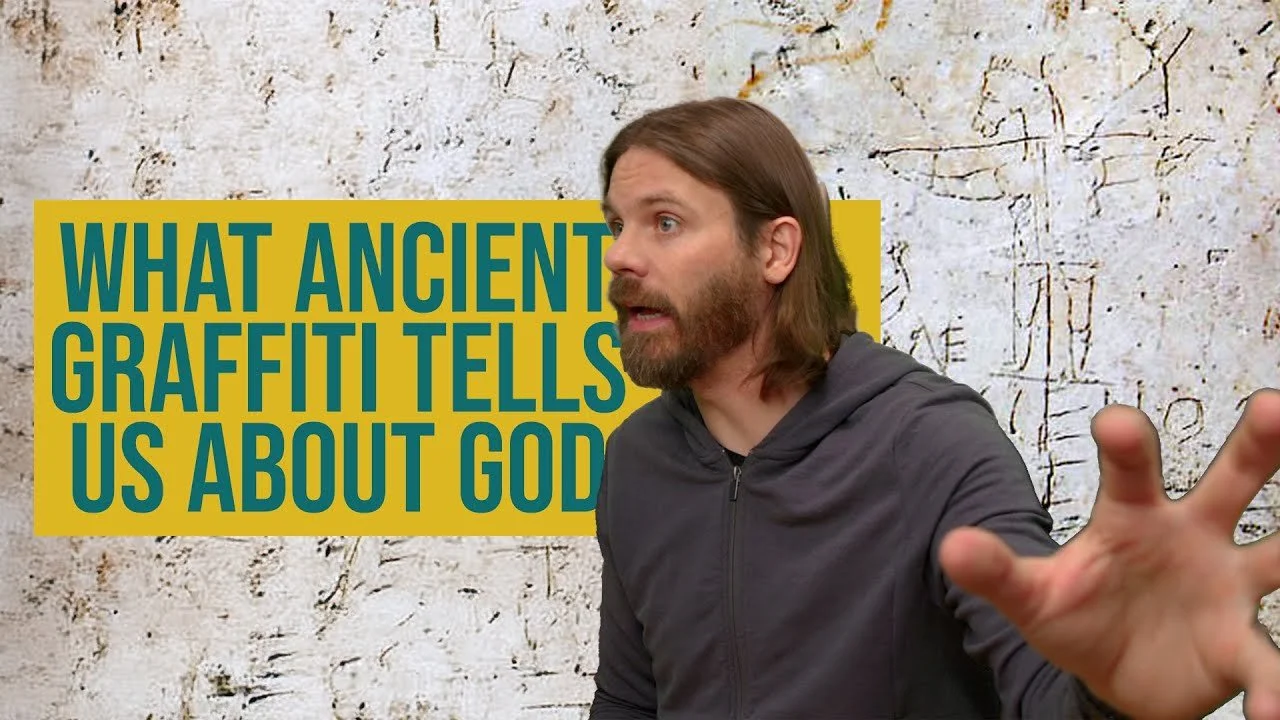
There's this really famous scratching or carving from the second century that was discovered in Rome. It's called the Alexamenos Graffito. But essentially, it's this sort of crude graffiti epithet that was carved into a wall. But it's an image of Jesus on the cross, with a donkey head, to illustrate how silly this person thought the whole idea was. And underneath is scratched the inscription, Alexamenos worships his God. Essentially, this was just someone making fun of their neighbour for being a Christian because they thought the whole idea of a crucified saviour was absurd. Why would any God worth worshiping allow that to happen to them?
The God Who Is Willing to Lose
It's interesting to me that all the way along, through all of the judges, always the catalyst for a new leader to emerge has been a battle. Even in the story of Deborah, who doesn't lead the military directly herself like the other judges, she's still the one who directs Barak to throw off the oppressive weight of Jabin and Sisera. But each time, all the way along, the battle, the fight is always presented as a fight to throw off some kind of oppressive force that's bearing down on Israel. God raises up a judge to save them from this. God raises up a judge to save them from this. And so, we don't get any of that. And yet here, if we're reading closely, at the start of chapter four, we don't get any of that. The Philistines aren't attacking, it just says the Israelites went out to fight. The whole problem with this story is that they're not being oppressed. At least not here. They just simply want a fight. And God wants none of it this time. Even if that means this God looks like a loser. This is a pretty important moment in Hebrew history. The realization that God is willing to lose when that's the better choice.

A New Bible Worth Your Shelf: Thoughts on the SBL Study Bible
A new Study Bible based on the NRVSue has also been released: The SBL Study Bible. This isn’t meant to replace a full commentary set, but it’s an excellent resource for anyone who wants to study the Bible more seriously.
Jesus and the Violence in Scripture: Reading the Story Forward
We need to grapple with the challenging depictions of divine violence in the Hebrew scriptures, contrasted with Jesus' message of grace and love. We wrestle with how these ancient texts can be reinterpreted through the compassionate lens of Jesus' life, steering clear of projecting our biases onto the divine. With insights from Robert Allen Warrior's analysis on the implications of conquest narratives for indigenous peoples, this conversation urges a thoughtful examination of our spiritual evolution and the consequences of our interpretations.
Get Behind Me, Satan
Satan is an interesting term. It's okay if you think devil, but that's not necessarily what's going on in Jesus' mind. Throughout most of the Hebrew scriptures, Satan or Hasatan was not necessarily a person or a being. It's better to think of it more like a title. So the adversary or the one who opposes the accuser is a good translation of Hasatan. There's even a passage in the book of Numbers where God opposes a man named Balaam and the Hebrew literally says that Yahweh stood in his way as an adversary, literally his Satan. Now it's also true that by the time of the New Testament, a lot of Hebrew ideas are getting mixed in with Greek ideas and Hasatan was being used to translate the Greek word diabolos or devil, and you get this Satan devil character that emerges and that lines up with some of the ways that Hasatan is used in the Hebrew scriptures. You just need to know that every time Hasatan appears, it's not necessarily being used to talk about a personified devil. It might also just being used in the normal sense of an adversary.
Three Visitors and the Evolving Image of God
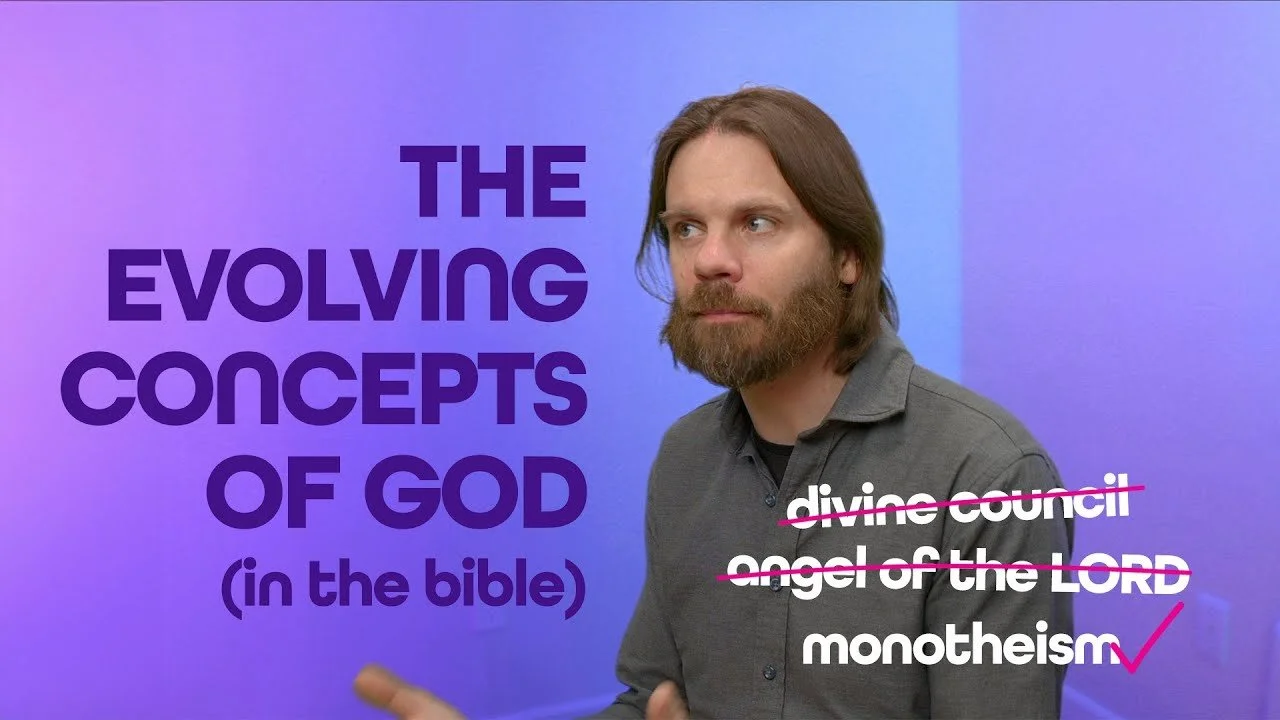
We took a bit of a side quest together, because the big question when reading Genesis 18 is what's up with these three guys called Yahweh? Well, Christians often unsurprisingly see Trinity here, three figures that, at least on the surface, are collectively called by the divine name. That must be father, son and spirit, and that's not an unreasonable conjecture at all. However, it's also like almost certainly not what the writer of this story had in mind at all.
React. Respond.
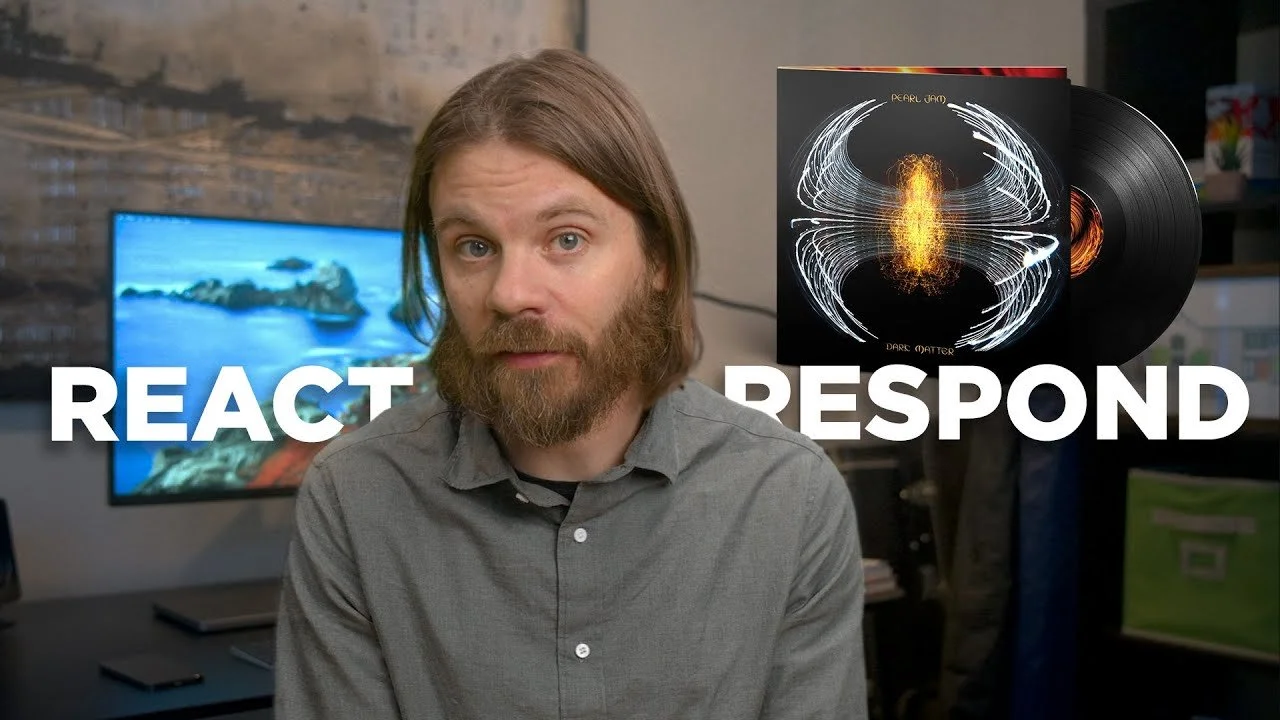
Have you ever noticed the asterisk in the Gospel of Mark? It's right there at the end of chapter 16, verse 8, and it signifies that this is where the Gospel originally ended. The tomb is empty, but Jesus is nowhere in sight, and the women are running in fear. What a strange place to end. It's so strange that a couple of centuries later, someone took it upon themselves to add a better, happier ending. But I like the original version because I think it reminds us of the difference between our reactions and our responses and what we chose to allow to become our story.
Who Do You Say I Am?
For 8 chapters now, he's been walking around healing people and excising demons. Mark has hinted at references to Hebrew scriptures and divine theophanies. Both crowds and critics all know exactly where the story is going. But thus far no one has put breath behind the hope they hold.