
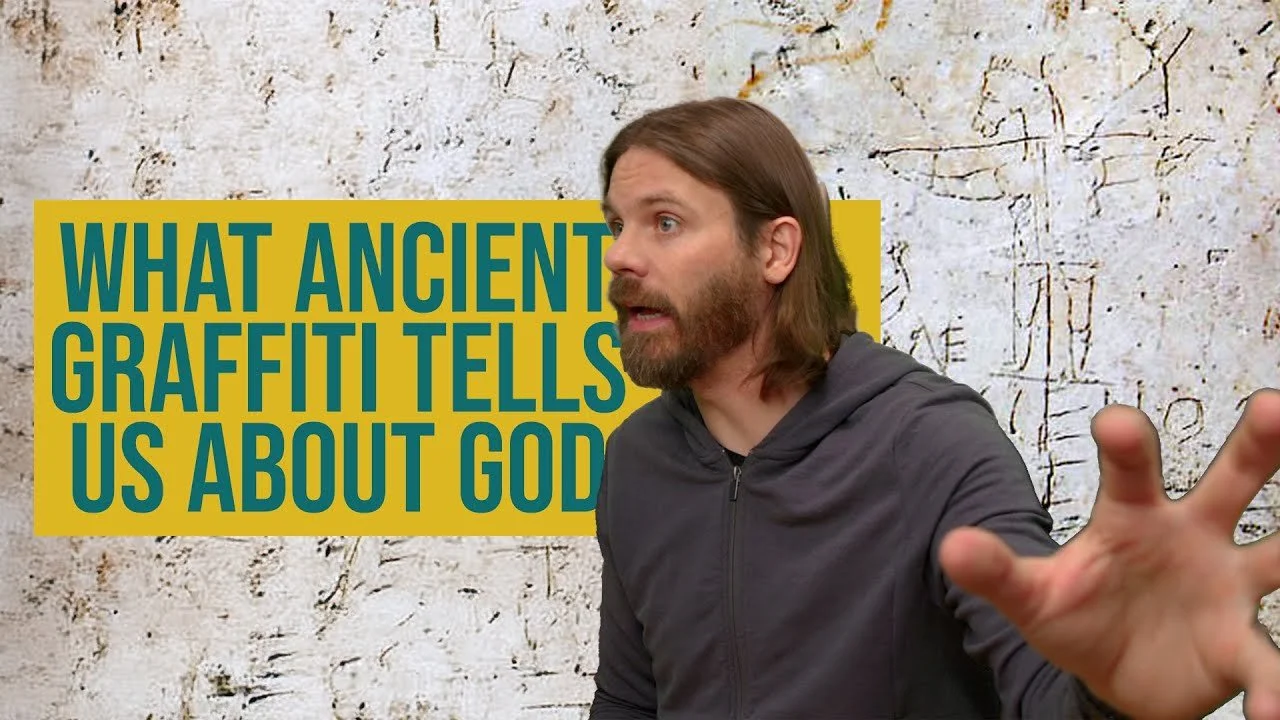
The Power That Gives Itself Away
There's this really famous scratching or carving from the second century that was discovered in Rome. It's called the Alexamenos Graffito. But essentially, it's this sort of crude graffiti epithet that was carved into a wall. But it's an image of Jesus on the cross, with a donkey head, to illustrate how silly this person thought the whole idea was. And underneath is scratched the inscription, Alexamenos worships his God. Essentially, this was just someone making fun of their neighbour for being a Christian because they thought the whole idea of a crucified saviour was absurd. Why would any God worth worshiping allow that to happen to them?
The God Who Is Willing to Lose
It's interesting to me that all the way along, through all of the judges, always the catalyst for a new leader to emerge has been a battle. Even in the story of Deborah, who doesn't lead the military directly herself like the other judges, she's still the one who directs Barak to throw off the oppressive weight of Jabin and Sisera. But each time, all the way along, the battle, the fight is always presented as a fight to throw off some kind of oppressive force that's bearing down on Israel. God raises up a judge to save them from this. God raises up a judge to save them from this. And so, we don't get any of that. And yet here, if we're reading closely, at the start of chapter four, we don't get any of that. The Philistines aren't attacking, it just says the Israelites went out to fight. The whole problem with this story is that they're not being oppressed. At least not here. They just simply want a fight. And God wants none of it this time. Even if that means this God looks like a loser. This is a pretty important moment in Hebrew history. The realization that God is willing to lose when that's the better choice.
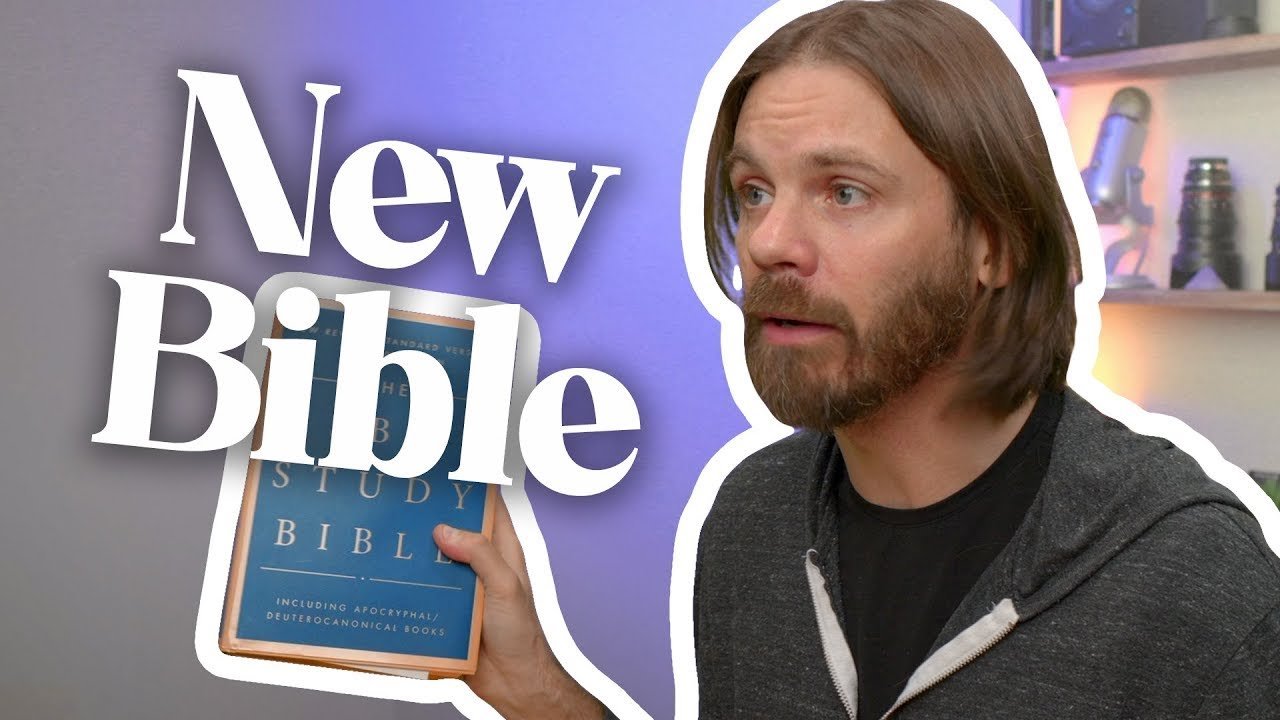
A New Bible Worth Your Shelf: Thoughts on the SBL Study Bible
A new Study Bible based on the NRVSue has also been released: The SBL Study Bible. This isn’t meant to replace a full commentary set, but it’s an excellent resource for anyone who wants to study the Bible more seriously.
Jesus and the Violence in Scripture: Reading the Story Forward
We need to grapple with the challenging depictions of divine violence in the Hebrew scriptures, contrasted with Jesus' message of grace and love. We wrestle with how these ancient texts can be reinterpreted through the compassionate lens of Jesus' life, steering clear of projecting our biases onto the divine. With insights from Robert Allen Warrior's analysis on the implications of conquest narratives for indigenous peoples, this conversation urges a thoughtful examination of our spiritual evolution and the consequences of our interpretations.
Get Behind Me, Satan
Satan is an interesting term. It's okay if you think devil, but that's not necessarily what's going on in Jesus' mind. Throughout most of the Hebrew scriptures, Satan or Hasatan was not necessarily a person or a being. It's better to think of it more like a title. So the adversary or the one who opposes the accuser is a good translation of Hasatan. There's even a passage in the book of Numbers where God opposes a man named Balaam and the Hebrew literally says that Yahweh stood in his way as an adversary, literally his Satan. Now it's also true that by the time of the New Testament, a lot of Hebrew ideas are getting mixed in with Greek ideas and Hasatan was being used to translate the Greek word diabolos or devil, and you get this Satan devil character that emerges and that lines up with some of the ways that Hasatan is used in the Hebrew scriptures. You just need to know that every time Hasatan appears, it's not necessarily being used to talk about a personified devil. It might also just being used in the normal sense of an adversary.
Three Visitors and the Evolving Image of God
We took a bit of a side quest together, because the big question when reading Genesis 18 is what's up with these three guys called Yahweh? Well, Christians often unsurprisingly see Trinity here, three figures that, at least on the surface, are collectively called by the divine name. That must be father, son and spirit, and that's not an unreasonable conjecture at all. However, it's also like almost certainly not what the writer of this story had in mind at all.
React. Respond.
Have you ever noticed the asterisk in the Gospel of Mark? It's right there at the end of chapter 16, verse 8, and it signifies that this is where the Gospel originally ended. The tomb is empty, but Jesus is nowhere in sight, and the women are running in fear. What a strange place to end. It's so strange that a couple of centuries later, someone took it upon themselves to add a better, happier ending. But I like the original version because I think it reminds us of the difference between our reactions and our responses and what we chose to allow to become our story.
Who Do You Say I Am?
For 8 chapters now, he's been walking around healing people and excising demons. Mark has hinted at references to Hebrew scriptures and divine theophanies. Both crowds and critics all know exactly where the story is going. But thus far no one has put breath behind the hope they hold.
The Sacred and the Common
At the end of the day what God cares about most is not that you follow all the rules it's who you become over time. How you learn to treat the people near you the love that flows out of you steadily always. And so Jesus says nothing that goes into you, nothing anyone does to you, nothing anyone could ever say to you, no circumstance in your life, none of this could ever diminish you in the eyes of God. But how you choose to live and how you choose to treat people, how you move through the world in the choices that you make that can, if you let it, make you very very ordinary. Because that's the thing, this word defilement that's what it means.
Revelation: Jezebel, Satan, and the Subversive Way of Peace
I had the chance to teach about the letter to Thyatira at Woodland Hills Church in Saint Paul recently. And that was fun, except the passage they asked me to teach on is honestly one of the most difficult in the book of revelation. So here's some excerpts from my sermon on Revelation chapter 2: the problem with Jezebel and some insight into how we approach the violent imagery in the book of Revelation.
Seeing in Stages: What a Strange Healing Tells Us About Jesus
Eye of salves containing spit were actually a pretty common story. There's this really interesting mention in the book of Revelation where the Spirit writes to the church in Laodicea. Now, in the city of Laodicea, there were 3 major industries. There was a robust banking sector. There was a lucrative trade in wool that came from a particular black sheep that was cultivated in the region. And there was an ancient ophthalmology school that specialized in this particular Phrygian powder that they used to make a soothing eye salve that was put on eyes.
When Rest Meets Compassion
Self-care is one of those phrases that has deeply embedded itself in our cultural consciousness. There's a massive self-care industry trying to sell you on how you can care for yourself well. So what does Jesus think about all this?
When Our Hearts Are Hardened
In his recounting of Jesus walking on water, Mark uses a curious phrase. He tells us that the disciples hearts were hard. That's a phrase that shows up a few times in the Bible; think of Pharaoh's heart. However, I think Mark is using this in a different way primarily to talk about a lack of imagination. All the ways that disciples miss the truly miraculous that's right in front of them. The Divine shows up in more ways than we know.
When God Passes By
Mark 6 has a pretty wild story. "Later that night, the boat was in the middle of the lake, and Jesus was alone on land. He saw the disciples straining at the oars, because the wind was against them. Shortly before dawn he went out to them, walking on the lake. He was about to pass by them." Mark 6:47-48 So what is going on here? Was Jesus really going to pass them by and head onto the shore by himself? Or does the writer have something else here in mind?
Letting Go of Old Stories
Maybe with the profound encounters between Jacob and Esau as a backdrop, we can think about how shedding the weight of former hurts and preconceptions can lead to a more authentic and liberated existence.
Love That Grounds the Gift
If I have the gift of prophecy and can fathom all mysteries and all knowledge, and if I have a faith that can move mountains, but do not have love,—I am nothing. 1 Corinthians 13 I might even suggest that if you can do all that, And you don’t have love, You’re not nothing, You’re a net negative.

What We Don't See: Grace Off the Page
By Genesis 33, a lot has happened in Jacob's life. He literally wrestled an angel, saw the face of God, and lived to tell the tale, for goodness sake. And yet here in the climactic moment, about to meet his brother, the only story Jacob has available to him is the one that took shape all those years ago when Esau was at his most vulnerable. For Jacob, Esau is still exactly who he was when, in a moment of anger, he lashed out in frustration. And maybe part of the problem here is that Jacob wonders if he's still that same person too. People change. And maybe it's time for us to let go of some old stories we're holding on to about the people in our lives.
The Hidden Hero: Esau and the Work of Reconciliation
I think Esau is the hero of his story. So why does the Bible say God hated him?
Healing on Both Sides of the Lake
The narrative starts with a heart-touching tale of Jairus pleading for his sick daughter's healing. But that's just the set up for the real story. We encounter the tale of a woman struggling with a bleeding disorder for over a decade. Through the interaction of these stories, Mark uncovers the remarkable power of Christ, his deep compassion, and his outreach to the marginalized and ostracized.
What Mark 5 Tells Us About Demons, Borders, and Belonging
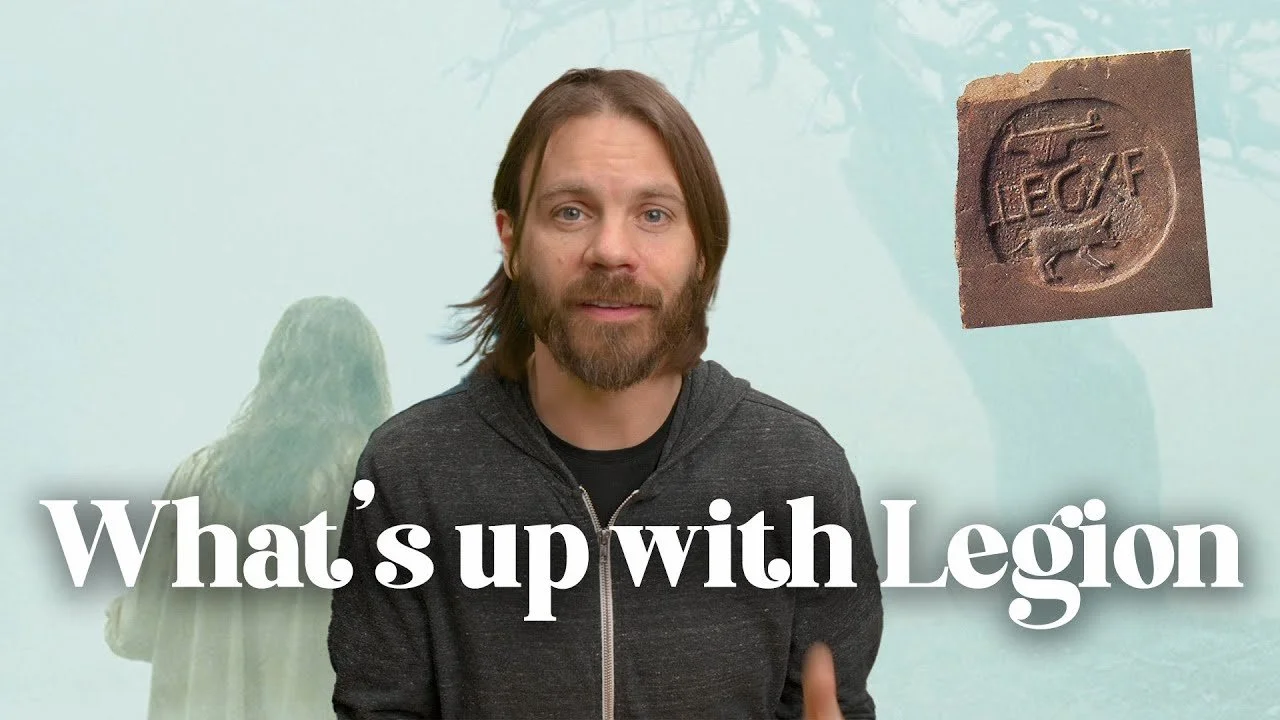
We cross Lake Kinneret and delve into the story of Jesus encountering a man possessed by demons. The conversation gets a little scary, political, and eventually, heartfelt. You'll find yourself entranced as we discuss the metaphoric representation of the man's possession and Jesus' role in calming the storm and freeing the man.